What is SGAI?
(Server-Guided Ad Insertion)
A smarter ad architecture.
Server-guided ad insertion combines server-side guidance with client-side ad presentation. StreamLayer SGAI applies this approach to interactive ads alongside the video stream.
More ways to monetize.
StreamLayer SGAI adds live nonlinear ads, pause ads, and interactive companions to your existing advertising. Create new inventory and premium interactive packages, with control over eligible moments and pacing.
%20(1).png)
While playing.
StreamLayer Moment Ads bring interactive advertising alongside live content, from key plays to lulls in the action. Choose Side Bar, L-Bar, overlay, or picture-in-picture formats.
.png)
%20(1).png)
%20(1).png)
%20(1).png)
.png)
When paused.
StreamLayer Pause Ads turn eligible viewer pauses into interactive brand experiences. Choose Side Bar, full-bleed image, or overlay layouts, with actions suited to the device. Explore pause ad formats and integration →
%20(1).png)

The stream stays untouched.
StreamLayer SGAI renders advertising through the client SDK without modifying the core video stream. Existing SSAI and video delivery systems keep their roles.
A smarter way to deliver ads.
StreamLayer SGAI combines server-side decisioning and orchestration with client SDK rendering. The server guides activation; the SDK presents interactive ads inside the streaming app.

Live Signal
Decisioning
Selection
SDK Rendering
Measurement
With StreamLayer, ad experiences can respond to live stats, key moments, scheduled logic, SCTE markers, VAST signals, elapsed time, or viewer actions. And because the SDK renders the experience, the result can feel native to the product across CTV, mobile, and web.
Built for more than breaks.
CSAI, SSAI, and SGAI describe different roles in advertising delivery. Their capabilities depend on the player, provider, and integration. StreamLayer SGAI adds interactive advertising alongside these existing workflows.
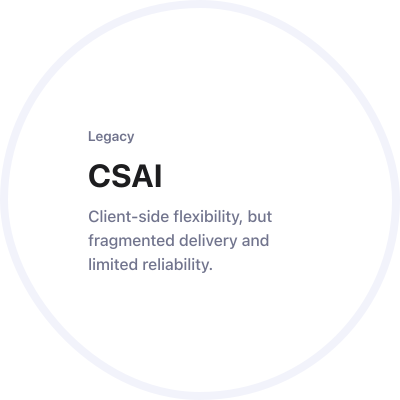
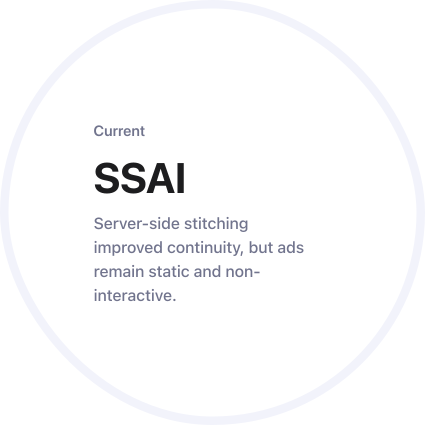
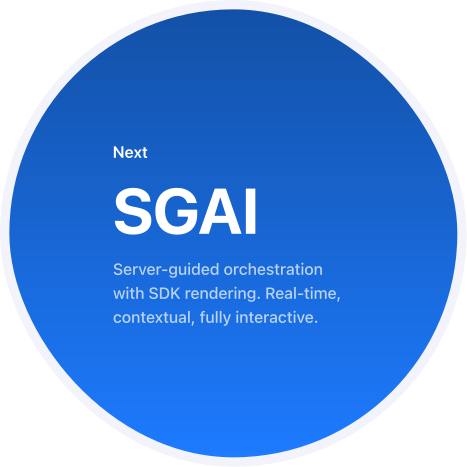
It turns ad delivery into an intelligent layer that can react in real time, respond to context, and support interactive creative instead of treating every opportunity like a stitched video impression.
StreamLayer SGAI and SSAI.
SSAI stitches video ads into the stream. StreamLayer SGAI adds interactive advertising rendered in the app. The comparison below describes complementary roles, rather than every implementation of SGAI.
SSAI
StreamLayer SGAI
Stitched video ads; companion support depends on the provider and player integration.
Video plus interactive ad units across multiple formats
Yes — ads are stitched into the stream
No — ad experience is rendered outside the stream by the SDK
Depends on the provider and measurement or companion requirements
Core to the model
Companion interactivity depends on the client integration
Full interactivity. Tap, swipe, scan, shop, vote, send to phone
Limited, usually marker-based or manually cued
Native to the architecture; can be triggered by stats, AI, rules, or timing
Targeting depends on the ad server, available signals, and consent.
Full context: moment, player, game state, stats, audience, device
Typically not a native product layer
Full pause ad platform
Mostly existing ad slots
Existing slots plus incremental, non-linear inventory
Frequently asked questions about SGAI
What is SGAI (Server-Guided Ad Insertion)?
Server-guided ad insertion combines server-side guidance with client-side ad presentation. Implementations differ in their use of manifests, players, and SDKs. StreamLayer SGAI uses server-side orchestration and client SDK rendering to add interactive experiences alongside the core video stream.
How is SGAI different from SSAI and CSAI?
CSAI places ad playback under client-side control. SSAI stitches video ads into the stream server-side. SGAI combines server guidance with client presentation. StreamLayer SGAI adds SDK-rendered live nonlinear ads, pause ads, and interactive companions alongside existing delivery systems.
What ad formats does StreamLayer SGAI support?
StreamLayer SGAI supports live nonlinear ads, pause ads, and interactive companions for SSAI video inventory. Formats include Side Bar, L-Bar, lower third, and other configured layouts. Available actions and presentations depend on the device and integration.
Does StreamLayer SGAI replace SSAI?
No. StreamLayer SGAI works alongside SSAI, CSAI, ad servers, SSPs, DSPs, and production workflows. The existing systems retain their delivery and monetization roles; StreamLayer adds interactive experiences through its client SDK.
Can StreamLayer SGAI increase advertising revenue?
StreamLayer SGAI can create additional advertising opportunities and support premium interactive packages. It does not guarantee higher CPMs or fill rates. Evaluate realized net revenue, eligible reach, advertiser demand, viewer response, and operating costs in a measured pilot.
Which platforms does StreamLayer support?
StreamLayer prioritizes CTV, followed by mobile and web. The SDK is integrated into the publisher’s streaming app. Confirm the intended formats, controls, and measurement against the actual device and player configuration.
What does a StreamLayer integration require?
The host app integrates the StreamLayer SDK, supplies the required event or playback signals, and provides the view that contains the advertising experience. For Side Bar and L-Bar layouts, the host app controls video resizing. Creative, eligibility, closing behavior, and measurement are configured and tested before launch.
How do live nonlinear ads differ from ad breaks?
Live nonlinear ads appear alongside programming at selected moments. Conventional ad breaks temporarily replace the programming with video ads. Nonlinear placements still add advertising exposure, so publishers should define pacing and suppression rules to protect the viewing experience.
Transform your viewing experience.
See how StreamLayer can drive engagement and unlock new revenue.