How StreamLayer SGAI Works: An Integration Overview
Understand how StreamLayer adds interactive advertising to your streaming app, how the platform works, and what your team integrates.
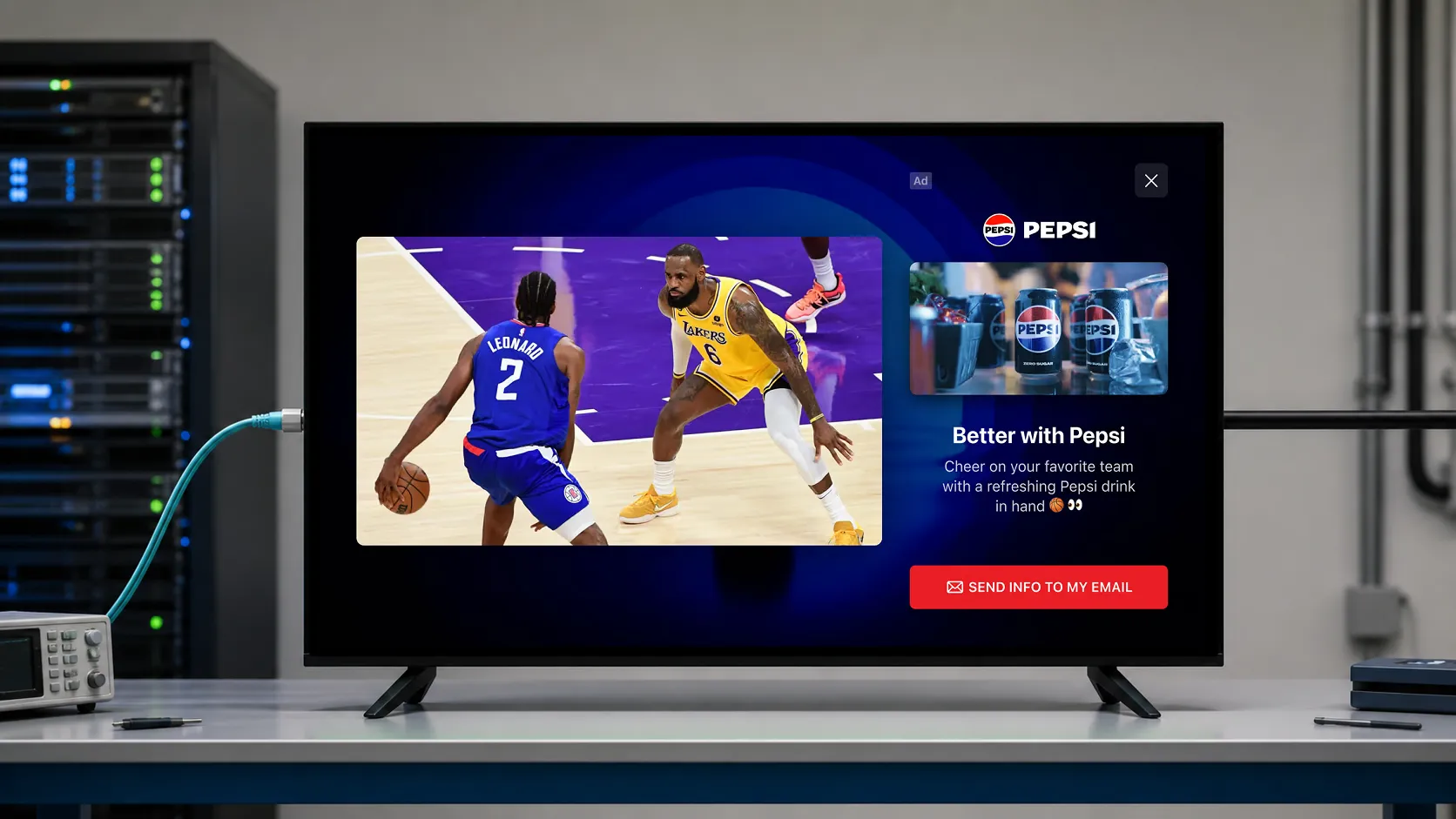
StreamLayer helps streaming platforms create advertising opportunities during live programming and viewer pauses, and add interactive experiences to existing video ads. Viewers can explore an offer, shop a product, or respond to a sponsor using their remote, phone, or touchscreen.
For your platform, that means new inventory to sell and more ways for advertisers to connect with viewers. StreamLayer works alongside your existing video delivery and advertising systems, with your team controlling when and where the experiences appear.
Three ways to bring advertising into the experience
Live Moment Ads
Show an ad around a selected moment while the program continues. During a sports timeout, for example, a food delivery offer could appear in a Side Bar beside the game. These are nonlinear ads: advertising presented alongside the content, outside a conventional ad break.
You choose the moments and placements that suit your programming. Live data and configured event signals help determine when an opportunity is relevant.
Pause Ads
Present an interactive ad when a viewer pauses. The creative can fill the screen, appear as a compact overlay, or sit beside the paused picture. It can include an offer, shopping experience, or current game information.
Still imagery or subtle, silent motion preserves the feeling of a paused scene. The viewer can act on the offer or resume watching, which closes the pause ad.
Interactive SSAI
Add an action to a video ad already delivered through server-side ad insertion, or SSAI. A synchronized banner might let a viewer explore a product or send an offer to their phone while the commercial plays.
Your SSAI provider continues delivering the video ad. StreamLayer displays the interactive companion in the app, timed to that ad.
How StreamLayer SGAI connects it all
SGAI stands for server-guided ad insertion. In StreamLayer SGAI, server services coordinate advertising opportunities and creative delivery, while the interactive experience appears inside your app. Its software development kit, or SDK, is integrated into your app to display the experience and handle viewer interactions.
The work is shared across three parts of the platform:
- StreamLayer Studio: Your team configures advertising experiences and triggers, manages events, and reviews activity and results.
- StreamLayer services: Server-side logic coordinates signals, publisher rules, and ad delivery. The Trigger Engine routes eligible activations, including those informed by live data or Moment Intelligence.
- The StreamLayer SDK: Software in your app presents the ad, responds to viewer input, and coordinates with the app's playback and layout behavior.
Together, these parts connect a configured advertising opportunity to the experience a viewer sees. The ad is displayed in the app; StreamLayer does not modify the underlying video stream.
Your app controls the viewing experience
Your engineering team adds the SDK to the streaming app and connects the information the chosen experience needs. Pause Ads use pause and resume signals. Live Moment Ads use event identifiers and configured triggers. Interactive SSAI uses timed metadata to synchronize the companion with a video ad.
Your app also provides the space where StreamLayer appears. An overlay can sit over the picture, beside it, or around it. For a Side Bar or L-Bar that reduces the video, your app controls the player's size and position and restores the normal layout when the experience ends.
That division keeps playback and screen layout under your control while StreamLayer supplies the interactive advertising experience. The integration is planned for your player and target devices across CTV, mobile, and web.
Built around your existing advertising workflow
StreamLayer supports creative managed directly in Studio and delivery through configured advertising partners. A direct-sold sponsorship and a programmatic campaign can use different delivery paths, so the integration defines which system selects the ad, supplies the creative, and records delivery.
Your existing ad server and buying partners retain their roles. In a programmatic workflow, the supply-side platform connects inventory to demand-side buyers; StreamLayer coordinates and presents its interactive experience within that agreed workflow.
For a product owner, the early decision is which inventory you want to offer and how your commercial team intends to sell it. That determines the creative, delivery, and reporting connections to include.
Choose when advertising belongs
Publisher controls govern which opportunities become ads. Your team defines eligible content, timing, frequency, placements, and closing behavior. A moment in the game is a potential opportunity; your rules determine whether an ad should appear.
StreamLayer Studio gives your operations team a place to configure experiences before an event, manage activity while it is live, and review results afterward. Clear closing rules protect the transition back to normal viewing, whether a viewer resumes playback or a timed placement ends.
Start with a defined experience
Choose an initial format, the devices your audience uses, and a campaign or sponsorship to support it. Your product, engineering, and advertising teams can then agree on the player connections, screen layout, creative assets, viewer actions, and reporting needed for launch.
Evaluate both the advertising result and the viewing experience. Review delivered impressions and interactions alongside playback behavior, correct closing, and net revenue. Use those findings to decide which formats and devices to expand next.
Explore StreamLayer SGAI, or talk with us about your app to map the experience you want to offer to the integration it needs.