Streaming Advertising for Regional Sports Networks
How RSNs can add streaming ad inventory for local sponsors without adding commercial breaks or changing their SSAI setup.
RSN streaming advertising is the sale of ad inventory inside a regional sports network's direct-to-consumer (DTC) app and stream. Game broadcasts have a fixed number of commercial breaks. RSNs therefore grow streaming revenue with nonlinear, pause and interactive ad units that run alongside the game, not with more breaks.
Why is RSN streaming inventory hard to grow?
An RSN stream usually carries the same game broadcast as the linear feed, so its commercial breaks follow the game's natural stoppages. The network cannot add breaks without changing the broadcast itself.
Local game streaming is now widespread. MLB reports that all 30 of its clubs have a direct-to-consumer streaming option in 2026. Fourteen teams added a new DTC option during the offseason (MLB.com). As more local viewing moves into apps, the question for an RSN is how to earn more from each streamed game without disrupting it.
Two constraints shape the answer. First, the break structure is set by the sport and the broadcast format. Second, RSNs sell heavily to local and regional advertisers. Those sponsors often buy packages that combine spots with sponsored broadcast features and on-air mentions. New streaming inventory has to fit those relationships rather than compete with them.
How can an RSN add streaming inventory without adding ad breaks?
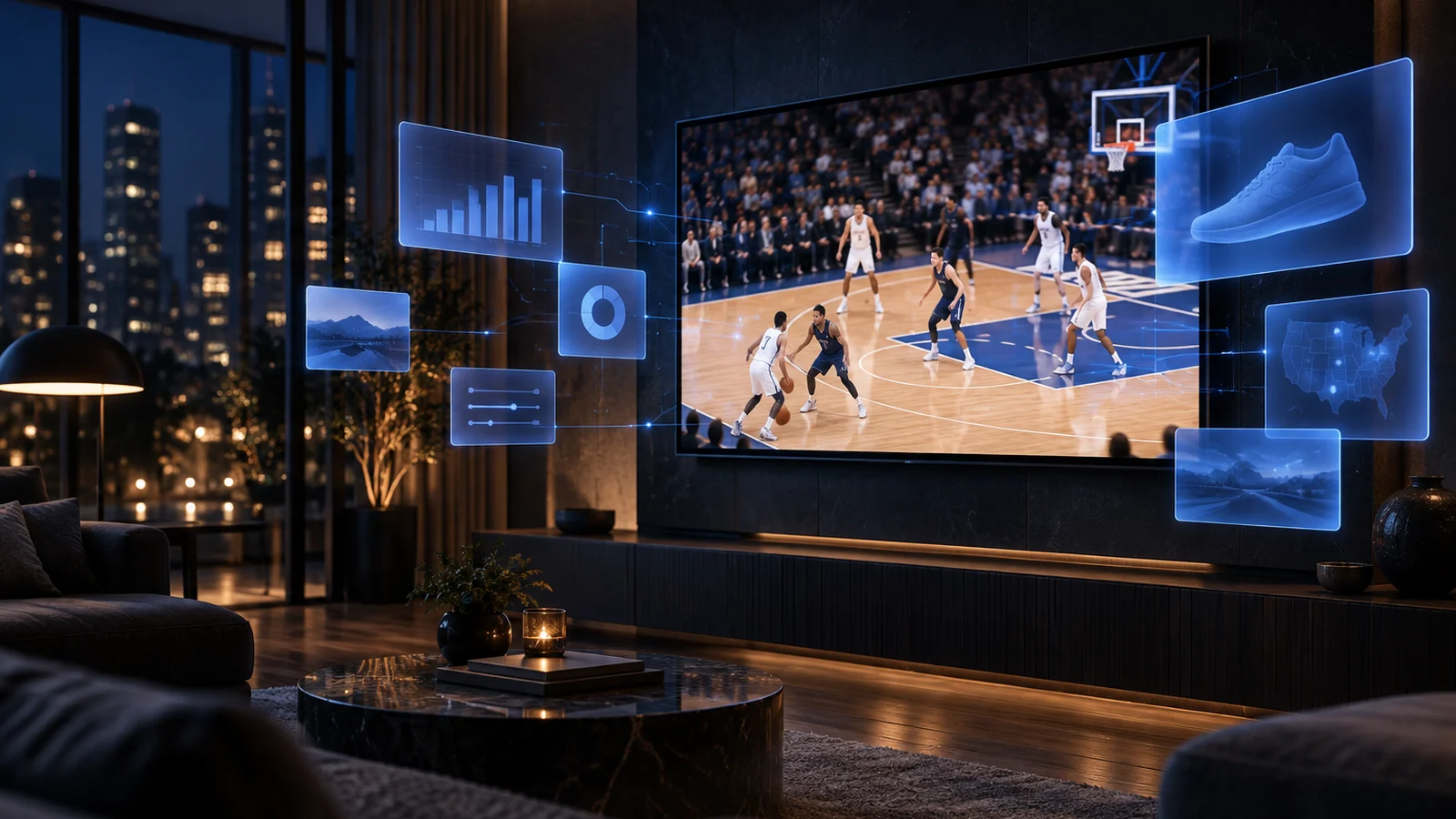
An RSN can add inventory that lives outside the break. That means ads during continuing play, ads when a viewer pauses, and interactive layers on spots that already run. StreamLayer provides one product for each.
- Moment Ads are live nonlinear ads activated around selected high-interest moments or relevant lulls in live programming while programming continues. Presentation formats include Overlay, Side-Bar, L-Bar, Frame, Full-Screen Overlay, PiP and Side-by-Side. Ad units include Lower Third, Insight, Prediction, Trivia, Poll and Shoppable. See Moment Ads.
- Pause Ads appear when a viewer pauses, after a publisher-defined delay of one to five seconds, and close when playback resumes. On an RSN app, they apply to paused live streams where the player allows it, and to replays and on-demand content. See Pause Ads.
- Interactive SSAI upgrades local spots that already run in the break. The SSAI provider keeps stitching and delivering the video ad. Timed metadata markers trigger a synchronized StreamLayer layer, rendered in the app, with a logo, CTA, QR code or promotional message. See Interactive SSAI.
None of these products modifies the underlying video stream or stitches new video into it. They are rendered by the StreamLayer SDK inside the RSN's own app, so the network keeps its existing break structure and ad delivery.
How do these formats fit local sponsor packages?
They give sales teams new streaming placements to add to the packages local sponsors already buy. A sponsor that owns a broadcast feature can extend it into the app with a matching interactive unit.
Examples of package components include:
- A sponsored lower third or L-Bar during a pitching change, timeout or injury stoppage.
- A sponsored poll, trivia question or prediction that runs during a lull in play.
- A Sports Stats Pause Ad that shows the score, stats leaders or league standings next to the sponsor's creative.
- An Interactive SSAI layer that adds a QR code or send-to-phone offer to the sponsor's existing video spot.
Because decisioning is server-side and rendering happens in the app, the interactive layer can vary by viewer. A sponsor with several locations can show a different offer or CTA by geography, even when the stitched video spot is the same for everyone. The same applies to loyalty status, audience segments and existing-customer status, where the RSN has that data and the right to use it.
RSNs should confirm which in-app inventory their rights agreements allow them to sell before building packages. Some placements may involve team or league approval.
How do live data and publisher controls work during a game?
Live data makes units relevant to the game in progress, and publisher controls decide which moments actually carry ads. An identified moment never triggers an ad by itself.
Moment Intelligence identifies advertising opportunities from live game context and live data. The RSN's rules then decide which opportunities become ads. Units can show scores, stats and, where appropriate and permitted, live odds.
Activations can be automatic or manual. Automatic activations use the Trigger Engine with live data, contextual triggers and rules. Manual activations come from StreamLayer Studio or from API-connected control-room and graphics workflows. This lets a producer keep direct control during sensitive moments.
In StreamLayer Studio, the RSN sets eligibility, timing, pacing, placement and closing rules for each campaign. Those controls keep ad load, sponsor placement and the viewing experience in the network's hands.
How is RSN streaming advertising measured?
StreamLayer Studio reports on the campaigns it runs, so RSN sales teams can show sponsors what their in-app placements delivered. Interactive units add viewer actions, such as CTA selections and QR code use, to standard delivery reporting.
For Interactive SSAI, the SSAI provider continues to handle delivery of the video spot. StreamLayer reporting covers the synchronized interactive layer. Agree on the reporting definitions with sponsors before launch. For more detail on pause measurement, see pause ad measurement and revenue.
StreamLayer does not promise specific CPMs or revenue gains. Results depend on audience, sponsor demand, creative and the controls the RSN chooses.
How does StreamLayer integrate with an existing RSN app and SSAI setup?
StreamLayer works alongside the RSN's existing SSAI provider, ad server, SSPs, DSPs and player. It does not replace any of them.
The division of work is straightforward:
- The SSAI provider keeps stitching and delivering the video ads in the break.
- The ad server, such as Google Ad Manager, keeps managing the RSN's existing campaigns.
- The host app supplies signals such as pause and resume events and timed metadata, and controls the player layout. For Side-Bar and L-Bar formats, the app resizes the video.
- The StreamLayer SDK renders the interactive, nonlinear and pause units inside the app.
- StreamLayer services and Studio handle decisioning, campaign setup, pacing and reporting.
SDKs are documented at docs.streamlayer.io for iOS, Android, React Native, Web, tvOS, Android TV and Google TV, Roku, Samsung Tizen, LG webOS, Hisense VIDAA and Xbox. Amazon Fire TV and Vizio are also supported today. Additional platforms, including PlayStation and TitanOS, can be added on request. For the architecture behind this, see StreamLayer SGAI.
Sales routes can match the RSN's current model. Pause Ads can be sold direct, through private marketplace deals, or programmatically through configured SSP and DSP partners. Curated.Media offers programmatic access to StreamLayer moment-based inventory through curated supply and PMP deals (announcement).
Frequently asked questions
Do these formats add commercial breaks to the game?
No. Moment Ads run while programming continues, Pause Ads appear only when a viewer pauses, and Interactive SSAI adds a layer to spots that already run. The break structure stays the same.
Does StreamLayer change the RSN's video stream?
No. StreamLayer does not stitch new video into the stream or modify it. The StreamLayer SDK renders units inside the app, and the existing SSAI provider keeps delivering the video ads.
Can local sponsors get different offers by market?
Yes, within the RSN's data and rights. Because decisioning is server-side and rendering happens in the app, the interactive layer can vary by geography, segment or customer status. The stitched video spot can stay the same for every viewer.
Who decides when a Moment Ad runs?
The RSN does. Moment Intelligence identifies possible moments, but publisher rules decide which become ads. Producers can also activate units manually from StreamLayer Studio or a connected control-room workflow.
Which devices can an RSN app support?
StreamLayer documents SDKs for major mobile, web, connected TV and console platforms, including iOS, Android, tvOS, Android TV, Roku, Samsung Tizen, LG webOS and Xbox. Amazon Fire TV and Vizio are also supported today.
If your network is planning its next streaming season, talk to StreamLayer about which formats fit your app, your SSAI setup and your local sponsor packages.